African Music and Its Global Impact: Afrobeats and Amapiano

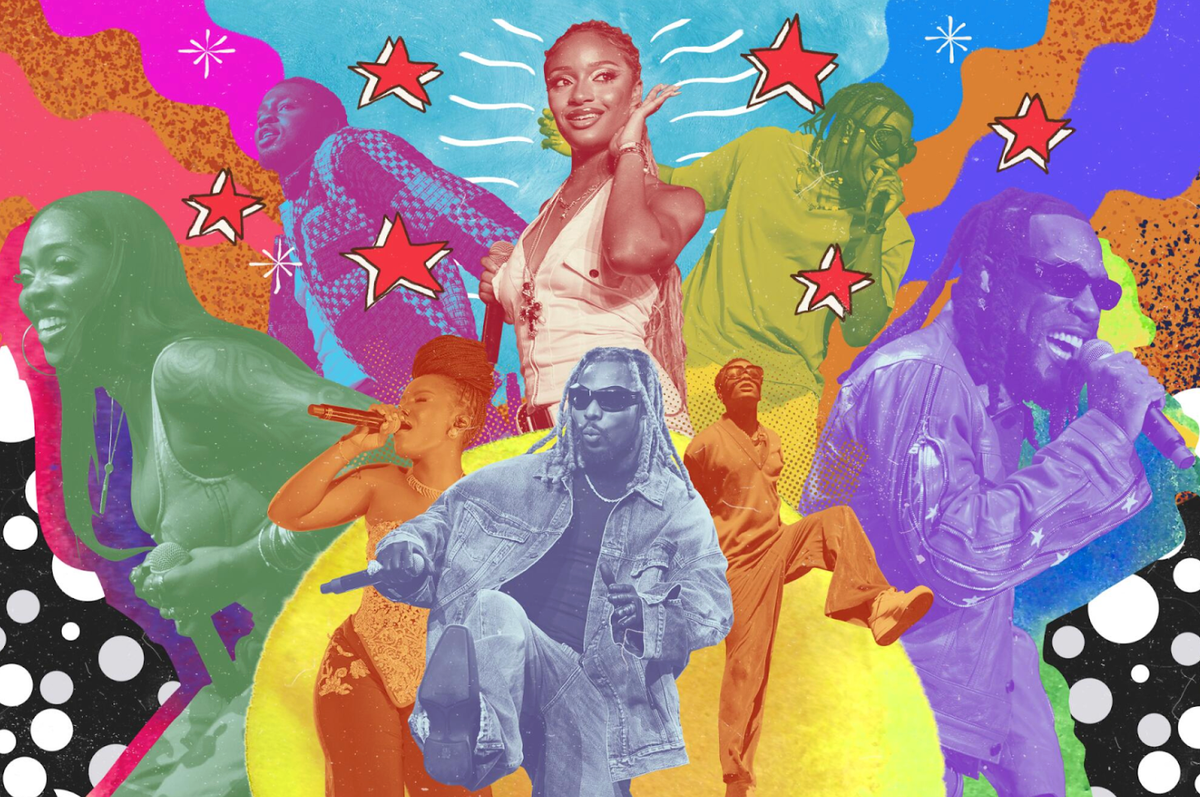
Sofia Ghilardi Rosiles
Braeburn Arusha International School
Arusha, Tanzania
KEY WORDS
- Fosters neuroplasticity: The active stimulation of the brain to reorganize, strengthen, or form new neural connections. Pa-C, J. F. M. (2025, April 2)
- Metronome sense: A device or even an app that produces a consistent, adjustable, and audible click at regular intervals. It is used by musicians to maintain a steady rhythm. Ghosh, U. (2026, January 30)
- Zulu: They are the largest ethnic group in South Africa. Zulu | meaning of Zulu in Longman Dictionary of Contemporary English | LDOCE. (n.d.).
Introduction
Music is a universal form of expression, not only entertainment. It is capable of shaping emotions, identities, and cultures across the world. From traditional rituals to modern digital platforms, music has always played a central role in human life, influencing how people think, feel, and connect with one another. Its ability to foster neuroplasticity and impact mental states highlights its deeper meaning.
Across the world, different cultures have developed unique musical styles that reflect their histories, values, and ways of life. Among these, African music stands out for its rich diversity, strong rhythmic foundations, and deep cultural roots. Over time, it has evolved from traditional community practices to globally recognized genres that continue to shape the international music scene.
This document explores the global impact of African music, focusing specifically on Afrobeats and Amapiano. It analyzes their origins, characteristics, and fast increase in popularity, as well as their cultural significance both in Africa and around the world. Through historical context, statistical data, questionnaires, and interviews, this study aims to understand how these genres influence global audiences and how they represent African identity.
What is music?
According to Pentreath, R. (2024, April 5), music is an organized sound with a specific structure based on rhythm, melody and harmony, created by humans. Made usually with the purpose of expressing emotions or achieving beauty. But it is more important than people may think, and it is and it has been everywhere for centuries. Music has been used in a variety of ceremonies, religious services and different forms of entertainment like in the theatre, radio, films and internet content.
Zaatar, M. T., Alhakim, K., Enayeh, M., & Tamer, R. (2023) explains that music is a powerful tool, capable of influencing people because of the transformative changes that it can induce in the brain,which fosters neuroplasticity and reshapes neural networks.
This explains why Peralta, L. (2026, March 4) explains that music is able to deeply affect people’s mental states and raise their moods. Because of this, songs and melodies can inspire people, guide their actions and have an impact in the formation of identities.
Because of music’s impact on people's identities. It also has an impact on culture and history. In the words of Alla’s Music Studio (2025, November 17). ”Music shapes cultural identity by reflecting personal experiences and giving people a clear sense of self. It strengthens communities by creating shared moments that unite people across cultures, ages, and backgrounds. It also drives social change by giving groups a voice and encouraging connection and inclusion.”
This will be different for every culture, specially because of the linguistic differences and the different life experiences that each group of culture has. All this is what created all the different genres of music nowadays, each influencing the world in a different way.
History of Music in Africa
According to (5) African Music refers to the musical sounds and traditions of the indigenous people of Africa, such as the Berber in the Sahara and the San in Southern Africa.
African music has changed greatly over thousands of years, meaning that African music now is greatly different to African music in the past. All because the musicians responsible for the creation of these songs, introduced their own creative and personal styles, which ended up shaping the music.
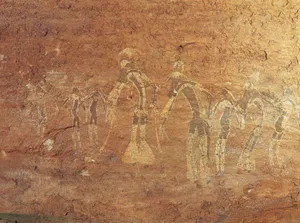
Some of the earliest evidence of African music comes from rock paintings. One of the best examples is the rock painting in Tassili-n-Ajjer, Algeria, dated to around 6000–4000 BCE, which shows a dance and musical scene. This is one of the oldest surviving indicators of music and dance together in Africa.
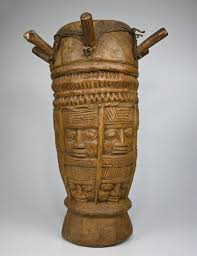
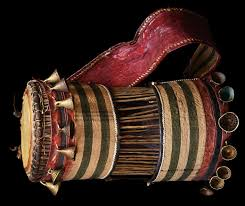
Some archaeological findings, like the ones on Ife, Yorubaland, Nigeria, show representations of musical instruments on stone or terra-cotta. It seems that a type of cylindrical drums called “ig̀bìn drums”were used from the 10th to the 14th century. These drums are part of Yoruba culture, as well as the “dùndún pressure drum” which were found appearing in plaques made during the 15th century.
These ancient instruments and rhythms are not something that has been completely lost over time, it may be different but it comes straight from the roots. Especially with the drums, these are still extremely used these days when it comes to African music. African music is a perfect representation of preserving traditions. This music is full of culture, and that remains true today, even unpopular genres.
Structure of African music
According to (5) African music is very varied because of all the different communities that exist in the huge African continent. But it can be described in a general sense.
Many musical instruments like idiophones, stringed instruments, membrane drums, wind instruments, zithers, harps, lutes, and lyres, are used in different societies all around Africa; specially in rituals, social occasions and for recreation. This music is often accompanied by dancing and merrymaking, which in a lot of some ceremonial activities are essential.
But the instruments mentioned before are not the only ones, there is a huge variety of instruments used in African music but this combination of instruments depends on the specific culture. Although in most cases the instruments won’t change the fact that rhythm is essential for African music. This is because in most cases African music uses fast, equally spaced pulse units, called “metronome sense”. Not only that but the timeline patterns are also essential. These patterns create a rhythmic foundation using instruments like bells or drums. They regulate the music specially in west and central African dance music, which helps the musicians and dancers stay together.
African music has grown and developed enormously, from local villages with traditional music to modern DJs reaching every border in the continent. African music can be generally described according to general culture, but that won’t apply to everything.
History of Afrobeats and Amapiano
- Afrobeats
According to (6) Afrobeats, a West African music style, emerged in Nigeria and Ghana in the early 2000s. It is known for its fusion of African and Caribbean influences, such as highlife, dancehall, Naija beats, and soca. Afrobeats features upbeat and danceable rhythms with syncopated, high-energy percussion and deep bass lines.
Afrobeats developed organically from the blended sounds of music produced by various artists in the late 1990s and early 2000s. OJB Jezreel and singer-songwriter 2Baba helped bring attention to the genre with the 2004 release of Face 2 Face, which became a hit in Nigeria and rapidly gained popularity across Africa. Its single, "African Queen," is one of the first major Afrobeats hits. The album earned 2Baba an MTV Europe Music Award for best African act in 2005, and eventually sold some two million copies.
Alex Okosi played a pivotal role in launching MTV Base Africa in 2005, which became one of the biggest catalysts for the global rise of Afrobeats. In April 2011, an Afrobeats radio program was launched by London-based Choice FM. DJ Abrantee, who spearheaded the program’s development, coined the word Afrobeats to describe the style of music and played a critical role in its popularization.
After this, Afrobeats became more and more popular in Africa,Europe and then, the rest of the world.
- Amapiano
On the other hand (7) explains that Amapiano is a genre of South African music which used to be called “numbers” before it even became popular. But it was MFR Souls who came up with “Amapiano”which in Zulu means “the pianos”. This name was chosen because not only was it more catchy but it is how Amapiano started.
Amapiano started as a combination of piano and a DJ 'S set. Later, that set had a name, deep house. Kabza De Small eventually started to play this new combination.
Because of this, many listeners and artists like Mark Khoza consider MFR Souls and Kabza De Small as the actual creators of Amapiano.
Amapiano started to gain popularity in 2017, after “Yellow, Yellow” was released by Calvin Fallo in 2015. This song features a broken drum beat anchored by almost six minutes of piano riffing and screeching organs.
Currently Amapiano has become more popular and it has been able to gain some popularity outside of South Africa. It is commonly said that this genre has been able to reach the rest of the world because of DJ Maphorisa, a local figure in the genre of house music who later started to experiment with Amapianio, expanding its popularity.
Afropop Worldwide | Amapiano to the world. (n.d.). adds that Amapiano went global after October of 2020. The blend of house, jazz and drums has been able to reach music festivals outside Africa, reaching many more people.
Impact of Afrobeats and Amapiano around the world
Zazzini, R. (2024, August 9) explains that Afrobeats and Amapiano took the music industry by surprise. They explain that this impact is not all about numbers but about culture. These genres tell African stories, experiences and perspectives. They challenge stereotypes.
In 2024 the “Best African Music Performance award’” was introduced as one of the prizes in the Grammys.This alone shows how these genres have won more recognition on a global scale.
The increase in popularity of amapiano and afrobeats have introduced new rhythms and sounds but they have also enriched the cultural and linguistic aspect of music.
Statistically speaking Dosunmu, D., & Mutaher, M. (2024, January 16) says that between 2017 and 2022, there was an increase of 550% in the number of times that Afrobeats songs were streamed on spotify. And in 2023, Afrobeats was streamed more than 14 billion times on the app. But with so many music apps these days, this number must be even higher.
As of 2025, Spotify reports that the people listening to afrobeats grew 22% from 2024. This would mean that millions or even billions of people listen to this genre. (12)
As for amapiano Tencer, D., & Tencer, D. (2024, June 17) says that in 2023 alone, amapiano had 1.4 billion streams only on Spotify. The app stated that from 2018 it had a growth of 5668%. The growth is incredible, in 2019 it had 34 million streams, in 2020 102 million and in 2021 300 million. The numbers are tripling.
Spotify Wrapped 2025: Kabza De Small dominates SA streams again. (2025, December 3). says that in 2025 DJ Maphorisa had about 155 million streams, Kelvin Momo more than 71 million streams, with his album being in the top 10 most streamed albums around the world.
According to Mdlbeast. (2025, March 6) both Amapiano and Afrobetas have influenced the music industry globally. Theory are reshaping modern pop with their south african deep house grooves and nigerian rhythms. They have influenced other artists in the music industry; influencing artists such as Beyonce, Drake and Rihanna. Pa-C, J. F. M. (2025, April 2)
What does the public say?
- Questionnaire
Sample Characteristics
The dataset includes 49 respondents, mostly aged 12–25, with a smaller group aged 26–55. Geographically, respondents are mainly from East Africa, with Tanzania, Kenya, Uganda, and Rwanda; with some from Europe, Asia, and America, providing a variety of backgrounds from local, international, and even cross-cultural perspectives.
Interest in Music from Other Cultures
Almost all respondents expressed interest in music from cultures other than their own, regardless of age or location.
Familiarity with Afrobeats and Amapiano
Afrobeats is widely recognized across all regions, with high familiarity even among international respondents. Amapiano shows lower recognition outside Africa, especially among younger participants.
Listening Habits and Genre Preference
- Afrobeats: Frequently listened to across all ages, with African respondents reporting daily or several times a week, while international participants were occasional listeners.
- Amapiano: Countries in Southern Africa, with African participants reporting moderate frequency.
- Genres listened to: Most respondents selected “both” Afrobeats and Amapiano; few exclusively chose one genre.
Perceptions of African Music
Respondents associated African music with energy, vibrancy, community, and happiness. African-based participants emphasized cultural identity and heritage, describing music as a representation of lived experience. International respondents, on the other hand, focused on entertainment value, highlighting rhythm, enjoyment, and party culture. Cross-cultural respondents acknowledged both the music’s cultural significance and its global appeal.
Cultural Representation Ratings (Afrobeats and Amapiano)
- Afrobeats: African respondents mostly rated 8–10 for cultural representation. Younger international respondents rated lower, with around 5–8, showing appreciation but not a deep cultural understanding.
- Amapiano: African participants rated slightly lower than Afrobeats with 5–10, noting its regional rather than continental representation. International ratings were more variable, often below 7.
Global Influence of the Genres
Afrobeats and Amapiano are increasingly influencing international music. African respondents highlighted collaborations with global artists and integration into Western music. Younger respondents mentioned popularity but provided limited reasoning. Adults emphasized global recognition and the adoption of rhythms and beats by other genres. Social media, streaming platforms, and live events were cited as key channels for international exposure.
Discovery
- Afrobeats: Mostly discovered through friends, family, or streaming platforms.
- Amapiano: Social media, friends, and local events were common discovery points.
- International respondents relied more on online platforms and social media, while African participants often learned through community and family.
Reasons for Popularity Outside Africa
Respondents attributed global popularity to energy, vibrancy, unique rhythms, danceability, and cultural authenticity. African respondents emphasized the music’s identity and communal aspects, whereas international respondents focused on novelty, enjoyment, and its “fresh” sound compared to Western music. Cross-cultural respondents noted a combination of these factors, highlighting both authenticity and global accessibility.
Influence of Age and Location
- Younger respondents (12–17): Focus on enjoyment, energy, and social aspects, with limited critical reflection.
- Young adults (18–25): Show analytical reasoning, recognize globalization and cultural significance, and understand genre limitations.
- Adults (26+): Provide structured perspectives, emphasizing Africa’s diversity and the limits of representation by a single genre.
- African respondents: Connect music to identity, heritage, and community, with detailed explanations.
- International respondents: Focus on entertainment, with less attention to cultural meaning.
- Cross-cultural respondents: Offer the most balanced and nuanced perspectives.
Final analysis of the questionnaire
African music is perceived as both a global cultural product and a local cultural expression. Geographic location and age significantly shape perceptions: African and older respondents demonstrate deeper cultural understanding, while younger and international participants prioritize energy and entertainment. Exposure, social context, and cross-cultural experience enhance comprehension of the music’s significance and global impact.
Interviews:
- Person 1, major Afrobeats listener
The first interviewee is Bright Lee Kweka, 17 years old, Tanzanian, and a resident of Tanzania.
He first discovered Afrobeats through social media. Specifically, the song “Introduction” by Asake which Bright describes as an influential artist, talking about his life. This motivated Bright to listen to more afrobeats music.
The specific kind of beats that Afrobeats have is what, according to Bright, makes this genre different. When Bright listens to these beats, he explains that he feels at peace. Not only that, but he explains that there are different types of Afrobeats, and each one makes him feel something different. The calmer ones make him feel calm, and the hype ones make him feel energized.
Bright explains that Afrobeats are played a lot in social events, such as weddings. Showing how big the impact of Afrobeats is in Tanzania.
Bright has seen the impact of Afrobeats outside Africa, especially on social media. He mentions that the countries of the United Kingdom, the United States of America, France, and Germany have been listening more to this genre. Bright also mentions that artists such as Asake and Wizkid have been more popular outside of Africa. In fact, Bright mentioned that they have even been doing concerts in such countries. This shows how much popularity these genres and their respective artists have gained.
Bright explains that Afrobeats represents Africa well, he mentions that the name of the continent is even in the name “Afrobeats”. And that this genre has certain beats that originated from Africa. Afrobeats expand and explain what African music is like.
- Person 2, major Amapiano listener
The second interviewee, Makirre Hassan, is 17 years old, Tanzanian, and a resident of Tanzania.
He first discovered Amapiano through his friends, who were playing songs from this genre, and they caught his attention. He explains that amapiano is unique because of its beats, different from everything that he has heard before. Amapiano creates a close atmosphere for him; it makes him want to dance.
He believes that Amapiano has gained popularity because of people dancing. Especially when they post these dances on social media, where more people find it interesting.
Makire explains that amapiano has successfully crossed the borders of Africa. He explains that in Switzerland people are creating dance groups. Which is one example of how far has Amapiano reached. Makira says that it is extremely astonishing that everyone is listening to Amapiano these days.
Makira explains that Amapiano represents both modern and traditional African music. Some Amapiano music is as he described chill, explaining that they are calm. And other types of Amapiuano are not. Meaning that Amapiano comes in different shapes; being capable of fully representing two sides of African music.
Makira establishes that although he enjoys Amapiano, this genre does not represent African music. He says that it doesn’t represent what Africa is as a mixture of cultures. He says that if Amapiano was meant to represent Africa, people wouldn't be interested in it. People just see it as music.
“Amapiano may represent Africa, but that is not what people see.” - Makire Hassan
- Person 3, Musician and music producer
The third interviewee is Enid Mollel, of 25 years old, a teacher in Braeburn International School Arusha, Tanzania, resident in Tanzania.
She is a singer and she writes her own songs, all using her computer and a digital audio work station. In fact she made a song titled “Fly” with the feat of B. Leo, released in 2023.
She establishes that booth Amapiano and Afrobeats are popular genres in Tanzania.
She discovered the genres by hearing them everywhere, specially in celebrations and events. Specifically Afrobeats from Nigeria.
But with Amapiano, it was first in 2020 when her mom played the first Amapiano song that she ever heard. After this year is also took over the Tanzanian music scheme.
Enid explains that what makes these two genres powerful is that they have very catchy hooks, they are easy to sing, and the melodies are easy to grasp. This makes it easy for people to sing them and play them. She also mentions the fact that they are very upbeat and uplifting, which makes them great for many things.
She explains that Africa is a very multicultural and diverse continent. She explains that although these genres are a fusion of many cultures, the representation is broad. But it does represent the vibrancy of Africa. The energy, joy, and love can be felt with this music, and this is the characteristic of what being African is to Enid.
Enid explains that these genres have gained popularity, especially when it comes to social media, where foreigners dance to these songs. As well as collaborations such as the one between Jason Derulo and Diamond Platnumz. These genres have been popular for a couple of years now.
Enid explains that as a producer, she has noticed that the popularity of these genres has made this kind of music generic. She explains that now everyone is trying to achieve the same sounds, and now everything is kind of sounding the same. She explains that with some Tanzanian songs, it feels as if they all have the same percussion throughout all the songs.
“People are not being as creative, they just want to hop on the trend, and ride that wave of popularity” - Enid Mollel
She explains that the message of Afrobeats and Amapiano has always been a celebration and a showcase of culture and vibrance. But she says that these days music is starting to sound really similar.
Finally, Enid explains that she believes that both Amapiano and Afrobeats will continue to shape music genres across the world, especially now that they have crossed borders outside of Africa. She believes that new genres will be created as these genres start to gain more popularity.
Conclusion
African music has shown to be more than a way of entertainment; it is a powerful expression of culture, identity, and history that continues to evolve with deep rooted traditions. From early rhythmic practices and traditional instruments to modern digital production, African music shows both the continuity of tradition and innovation across generations.
The rise of Afrobeats and Amapiano demonstrates how African genres can successfully cross cultural and geographic boundaries, influencing the global music industry. Their growth is not only evident in streaming numbers and international recognition, but also in the way that they are able to shape modern sounds, inspire global artists, and introduce African stories to bigger audiences. These genres highlight the vibrancy, diversity, and creativity of African cultures, even if they cannot fully represent the entire continent because of its wide variety and complexity of cultures.
The research made from the questionnaire and interviews shows that perception of African music can vary depending on age, location, and cultural exposure. While international audiences often focus on rhythm and entertainment, African listeners tend to connect music more deeply with identity, heritage, and community. This contrast shows both the strength and the limitation of global popularity.
African music is being heard worldwide, but it is not always fully understood.
At the same time, the fast popularity has created challenges, such as the risk of music becoming repetitive or driven by trends rather than creativity. However, this also opens opportunities for creating new genres and types of music influenced by Afrobeats and Amapiano.
In conclusion African music continues to shape and redefine global culture. As these genres expand and evolve, they will likely remain influential in the music industry, contributing not only with new sounds, but also as new perspectives that improve the global understanding of music and culture.
Bibliography
- Pentreath, R. (2024, April 5). What does ‘music’ mean, and what is the origin of music? Classic FM. https://www.classicfm.com/discover-music/origins-music-meaning-of-word/#:~:text=What%20is%20the%20simple%20definition,is%20used%20to%20powerful%20effect
- Zaatar, M. T., Alhakim, K., Enayeh, M., & Tamer, R. (2023). The transformative power of music: Insights into neuroplasticity, health, and disease. Brain Behavior & Immunity - Health, 35, 100716. https://doi.org/10.1016/j.bbih.2023.100716
- Peralta, L. (2026, March 4). Exploring music’s influence on society and culture. Save the Music Foundation. https://www.savethemusic.org/blog/how-does-music-affect-society/#:~:text=Why%20is%20Music%20Beneficial%20to,by%20music%20is%20not%20alone
- The role of music in cultural identity and community building today. (2025, November 17). Alla’s Music Studio. https://allasmusicstudio.com.au/the-role-of-music-in-cultural-identity-and-community-building-today/#:~:text=Music%20shapes%20cultural%20identity%20by,and%20encouraging%20connection%20and%20inclusion
- Robotham, D.K. (n.d). African music. Britannica. https://www.britannica.com/art/African-music
- Payne, L. (2026, February, 10) Afrobeats. Britannica. https://www.britannica.com/art/Afrobeats
- Afropop Worldwide | Amapiano to the world. (n.d.). Afropop Worldwide. https://www.afropop.org/audio-programs/amapiano-to-the-world
- Zazzini, R. (2024, August 9). The rise of Afrobeats & Amapiano is not going to stop. Highsnobiety. https://www.highsnobiety.com/p/what-is-amapiano-and-afrobeats/
- Dosunmu, D., & Mutaher, M. (2024, January 16). How Spotify helped turn Afrobeats into a global phenomenon. Rest of World. https://restofworld.org/2024/spotify-afrobeats-go-global/
- Tencer, D., & Tencer, D. (2024, June 17). Amapiano streams exploded by 5,668% on Spotify between 2018 and 2023. Music Business Worldwide. https://www.musicbusinessworldwide.com/amapiano-streams-exploded-by-5668-on-spotify-between-2018-and-2023/#:~:text=The%20South%20Africa%2Dborn%20amapiano,around%20300%20million%20in%202021
- Spotify Wrapped 2025: Kabza De Small dominates SA streams again. (2025, December 3). Music in Africa. https://www.musicinafrica.net/magazine/spotify-wrapped-2025-kabza-de-small-dominates-sa-streams-again#:~:text=3%20Dec%202025%20%2D%2017:25,were%20from%20desktop%20and%20TV
- Afrobeats & Amapiano are shaping global pop | ISTITUTO MARANGONI. (n.d.). ISTITUTOMARANGONI. https://www.istitutomarangoni.com/en/maze35/game-changers/afrobeats-amapiano-global-pop-african-music-2025#:~:text=From%20Lagos%20to%20Soweto%2C%20African%20genres%20like,Why%20the%20Future%20of%20Pop%20Is%20African
- Mdlbeast. (2025, March 6). The global influence of Afrobeat. MDLBEAST. https://mdlbeast.com/xp-feed/music-industry/the-global-influence-of-afrobeat
- Pa-C, J. F. M. (2025, April 2). Tips to leverage neuroplasticity to maintain cognitive fitness as you age. Harvard Health. https://www.health.harvard.edu/mind-and-mood/tips-to-leverage-neuroplasticity-to-maintain-cognitive-fitness-as-you-age#:~:text=Neuroplasticity%20is%20the%20brain's%20ability%20to%20adapt,concepts%20*%20**Physical%20activity**%20*%20Aerobic%20exercise
- Ghosh, U. (2026, January 30). What is a Metronome in Music? How to Use it? Ipassio. http://ipassio.com/blog/what-is-a-metronome#:~:text=At%20its%20core%2C%20a%20metronome,an%20accurate%20sense%20of%20time
- Zulu | meaning of Zulu in Longman Dictionary of Contemporary English | LDOCE. (n.d.). https://www.ldoceonline.com/dictionary/zulu#:~:text=From%20Longman%20Dictionary%20of%20Contemporary,a%20member%20of%20the%20Cabinet
Image Bibliography
Cover image: https://www.latimes.com/entertainment-arts/music/story/2023-04-05/afrobeats-black-angelenos-africa-pheelz-tems-juls
Image 1. https://www.britannica.com/art/African-music
Image 2. https://wmic.net/yoruba-igbin-drum-bannanas/
Image 3. https://drummuseum.com/Africa/talking-drum-yoruba-nigeria.html