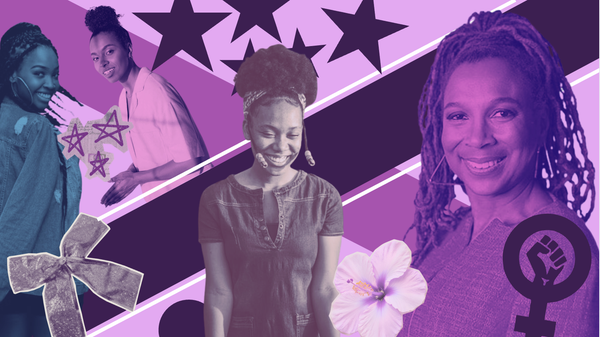
Breaking Generalized Gender Stereotypes Towards Teenage Girls


By: Francine Kamutenga, IST, Tanzania.
As a girl, I've been surrounded by multiple stereotypes. The most common one is ‘why don’t you dress girly’ and such. I brushed it off when I first got those comments, but after growing up and constantly hearing it around me, simply because I prefer to wear jeans and baggy pants rather than skirts and dresses like a ‘proper’ girl got so annoying and frustrating.
I love Acubi, streetwear, comfortable, and baggy clothing because I feel like myself, I feel like I’m dressing up for myself and not trying to impress others. I’m inspired by female artists and idols who dress on the more masculine side with comfort because it made me think that even though I am a girl, I am free to do anything else, such as my clothing choice. Just like Billie Eilish, she wears oversized shirts and baggy shorts or jeans with no embarrassment or shyness of being more masculine rather than feminine. Secondly is the stereotype of pink for girls and blue for boys. Most of the things I own are pink in terms of decoration because that's how the decorations were bought, blue for my brother, and pink for my younger sister. This doesn’t only apply to me, but to multiple girls and boys who are told they can’t like blue because it's for boys or boyish, or they can’t like pink because it’s girly and feminine.
I never listened, I openly loved red, blue, and yellow growing up because they were beautiful and surrounded me everywhere, hibiscus flowers, bees, and the sun. So many things of those colors made me love them the more I grew up. These days, my favourite colors are yellow and blue; they go so well together in outfits and general aesthetic. A specific event that happened was that we had just finished shopping, and I was in the living room, sitting comfortably. One of my legs was propped up on the seat, and the other was spread out in front of me as I scrolled on my phone. My mother caught my attention and said, ‘Sit like a lady.’, I looked at her in confusion and responded to her, ‘When does sitting have a gender?’ I hated the generalized expectations of how girls should be, specifically in my age range, because those negative comments about every little non-feminine action will never leave their minds; they always stick, no matter how many times you share positive ones in their place when they listen.
I still remember the frustrating times of being surrounded by pink decorations, Barbie dolls, and girly things, but I didn’t resist openly until I was 9/10. I expressed my personal style, what I loved, and never let the expectational stereotypes define me again. I live the rest of my life as an individual, a normal teenage girl with no shame.