Expressionism through Vehicles: An Insight Into the Bajaji and Daladala Quotes in Tanzania.

By: Sarah Hirji, IST, Tanzania.
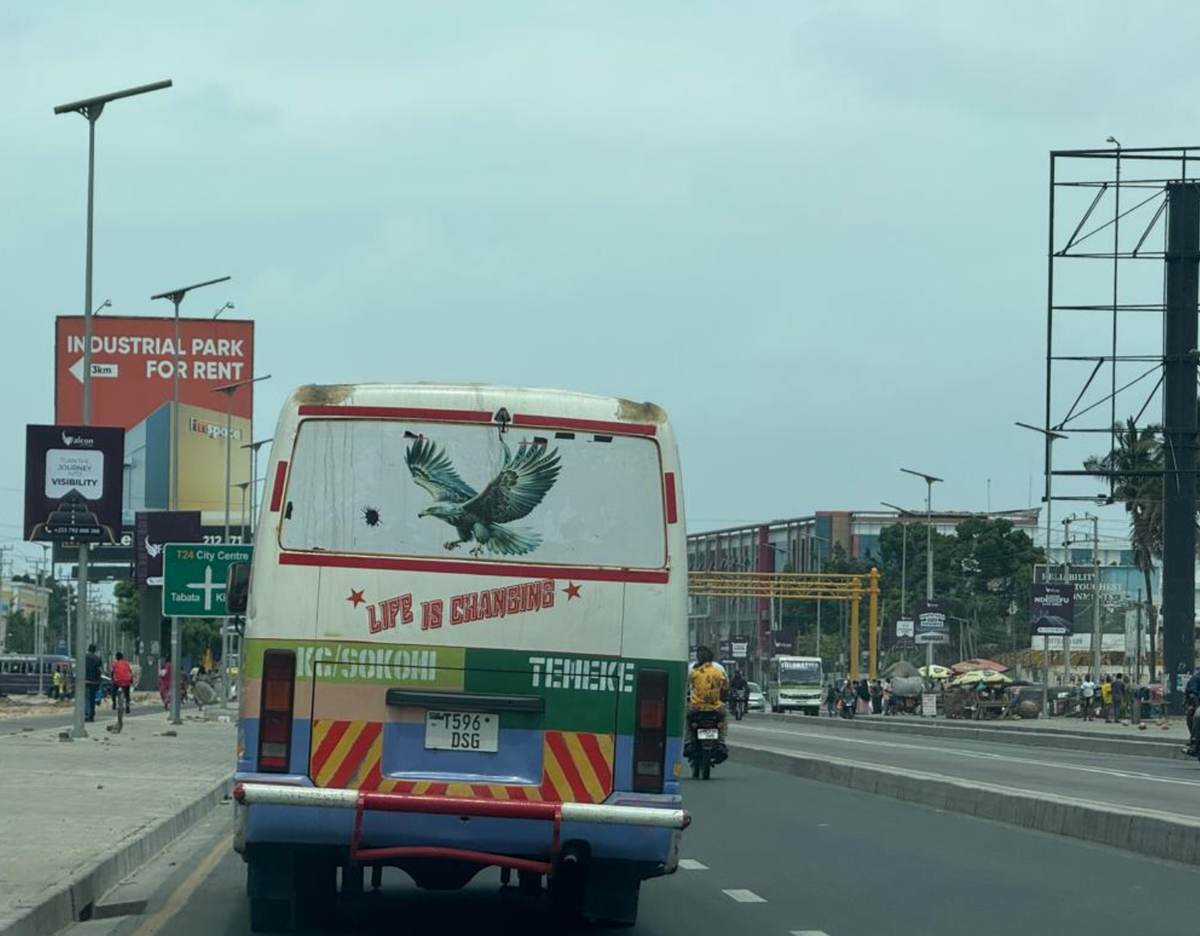
It has been a long and stressful day, and you are on your way back from school when something catches your eye on the back of a Daladala (public bus in Tanzania) or a Bajaji (tuk-tuk). Usually, it’s a quote, joke, prayer, or a life lesson. This time, it says “Life is Changing,” with the image of an eagle flying on the back. This makes you think and ponder what it says for a minute. You ask yourself, “How is my life changing?” “Why did the driver stick this on the back of his bus?” This sort of moving gallery entertains us while we are in a vehicle, while also providing inspirational quotes to make us ponder.
Furthermore, it plays a role in cultivating individuality in the buses and Bajajis, each one of them unique and telling a different story. Often, these Daladalas do not belong to the driver; they simply drive it around all day, and most bus drivers are merely employees of a larger company. However, these stickers on the back of the buses give the driver a means by which they can express themselves and to grow a nonverbal connection with the rest of the cars and people around.
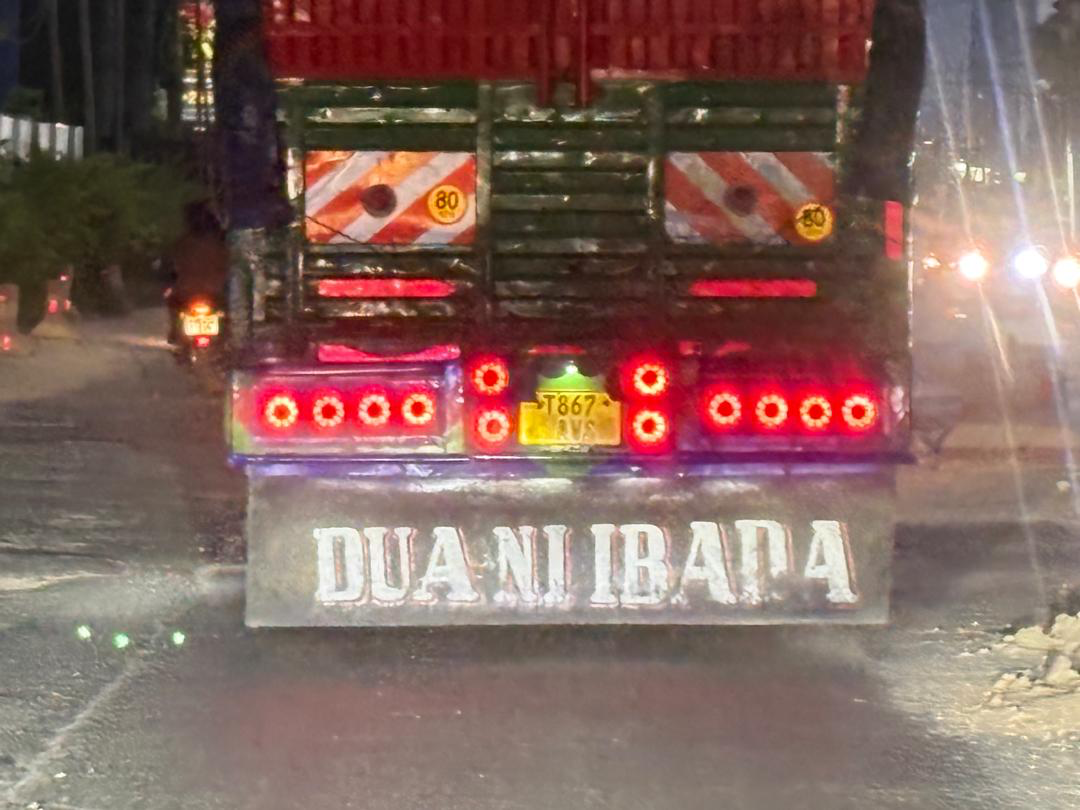
Dua ni Ibada: Meaning “supplication is worship.”
The back of the truck in the image displays the saying “Dua Ni Ibada” in bold, capital, white painted letters. Usually, the stickers and letters on the backs of the trucks are large and eye-catching, most of the time in contrasting colors and capital letters. This saying is a religious one, meaning “supplication is worship.” A saying like this bears a deeper meaning, spreading the message that faith becomes a source of reassurance, and turning to god is not an act of faith itself, but also a way to navigate life.
Since Tanzania is a very religious country, more than 97% of its population identifies as religious, with Muslim and Christian majorities in most areas. This influences the discourse and subject of most of these sayings and stickers.
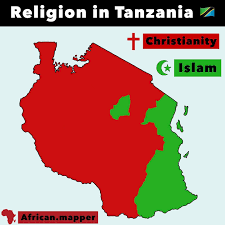
A 2020 Estimate by the Pew Research Center revealing 63.1% of the population is Christian and 34.1% is Muslim.
The diagram displays the distribution of religion in the country, showing that most coastal regions are Muslim, and most inland areas are largely Christian. One may hypothesize that the stickers and sayings at the back of the Bajajis and Daladalas in the Christian areas of Tanzania may reflect Christian sayings and Bible verses, and Vice Versa with Islam.
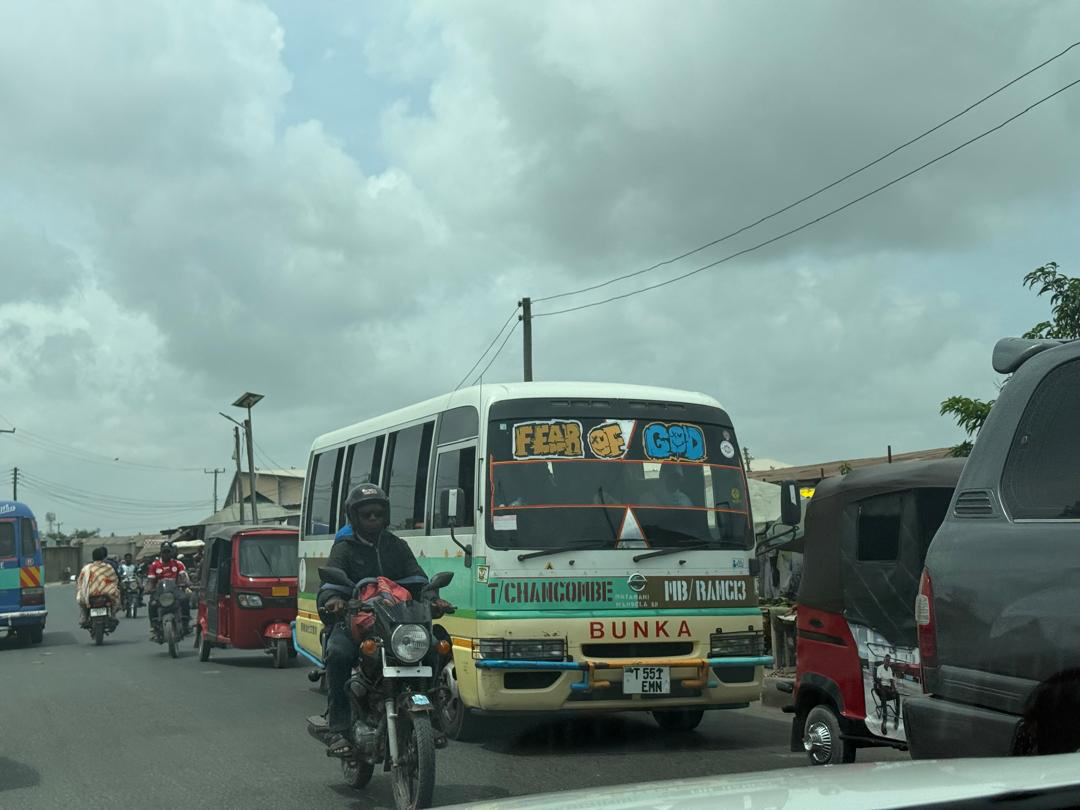
Sometimes, the religion the sticker corresponds to can be neutral, offering a message applicable to both faiths. The term “Fear of God” is written in English, which appeals to more audiences and is not subject to a specific religion. It reflects how cultural values can be shared within Christianity and Islam, reflecting the peaceful harmony between the two religions in Tanzania. Rather than communicating literal fear of God, it encourages readers to instill God-wariness and awareness of their actions.
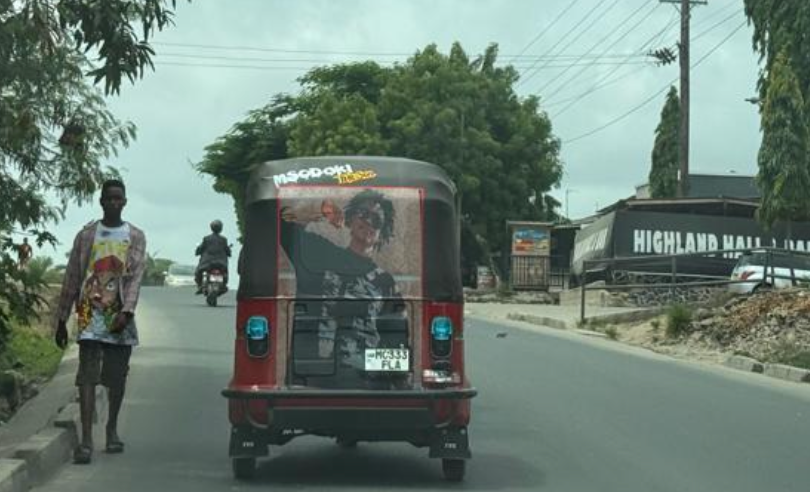
While religious quotes are common, not all messages convey religious sayings. Many other vehicles display humorous remarks, motivational sayings, and reflections of the driver's interests. In the image above, you can see that on the Bajaji, the driver has a large visual image with a slogan in the top left corner. This demonstrates how Bajaji drivers also use this as a means of self-expression, displaying a person or a style they probably really like. It also serves as an example of Tanzania’s strong visual culture, depicting how many vehicle drivers often communicate with each other through nonverbal means.
All these slogans, sayings, and religious quotes ultimately serve as a reminder for the driver's self as well. As they switch on their Bajaji or Daladala every day and start their work in the quiet, dark mornings, these quotes (especially those invoking kindness, inspiration, or faith) work as quiet affirmations and comfort. Together, these quotes act as a nonverbal, moving gallery, open to all the hustle and bustle of Tanzania’s roads. This communicates how Tanzanians have found a creative and efficient way express themselves or spread emotions through their vehicles, often which they do not own themselves (especially Dalaldalas).
A sticker on a Bajaji or a Daladala might make you think for a minute or two, but due to the intention of the driver, it can impact everyone driving on the same road beautifully.
This teaches us how, even if we may not be an artist with a plain canvas waiting for us to share with the world, we can still use common means present in our everyday lives to communicate to the individuals around us.