How Has Colonialism Shaped History and Memory?
By: Sarah Hirji, IST, Tanzania.
George Orwell famously wrote, “Who controls the past controls the future: who controls the present controls the past,” emphasizing the relationship between power and history (Orwell, 1949, p.34). From the 15th century onwards, colonialism has shaped the Global South; its legacy extends beyond material exploitation to the control of historical narratives and memory. In this context, “history” refers to officially recorded, written accounts produced by institutions of power, while “memory” encompasses orally transmitted and socially integrated lived experiences (Sengupta, 2009). By examining how colonial powers constructed history and memory, this essay argues that, although colonial frameworks continue to influence contemporary societies, postcolonial critique challenges this dominant discourse.
Throughout colonial history, imperial powers have configured historical significance by subordinating the lived experiences of the colonized in favor of narratives that portrayed political change as elite-driven and orderly. This was evident during British colonial rule in India, where historical narratives were crafted by British historians and India’s bourgeois elite, prioritizing constitutional reform and elite governance over populist dissent. Historian Ranajit Guha contends that both nationalist and colonial historiographies often privilege the elite (Guha, 1982). Thus, this influence attributes Indian nationalism to the elite, thereby marginalizing subaltern agency and mass political action. Such historiographical practices reveal how colonists leveraged their power, recasting colonial governance as administratively justifiable and nationalist agency as derivative. In doing so, colonialism not only influenced historical events but also shaped how subsequent generations perceived them.
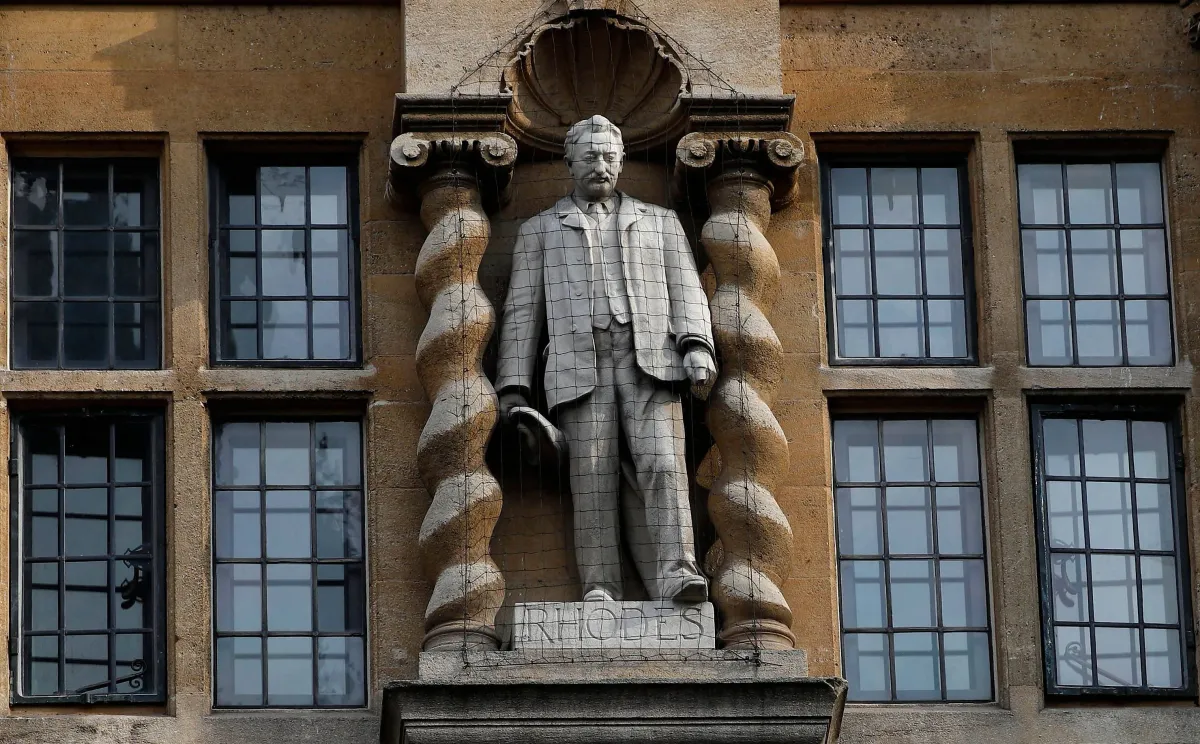
Beyond the control of governance and historiography, colonialism fashioned commemorative history in favor of colonial authority. Pierre Nora’s concept of “lieux de mémoire” posits that memory is preserved through constructed sites, including monuments (Sengupta, 2009). An infamous statue of Cecil Rhodes, an imperialist in South Africa, became contested as activists argued that “the statue has become a focus of public debate on racism and the legacy of colonialism” (Oriel College, 2021, p. 17). Achille Mbembe asserts that to “decolonize”, societies must reevaluate symbolic memory, rather than commemorating colonial figures under the pretext of preservation (Mbembe, 2016). The controversy surrounding the Cecil Rhodes statue demonstrates how sites of memory can reframe colonial dominance as public commemoration. Its display in public spaces frames colonialism as a natural order of authority, rendered legitimate and emotionally normalized.
Although colonialism exerted a profound influence on the construction of memory and history, its narratives and discursive structures have been dismantled by postcolonial critique. Frantz Fanon argues that imperial frameworks collapse when their authority wanes, enabling new histories (Fanon, 1963). Albert Memmi states that colonialism thrives on ideological stereotypes and myths, such as the colonist’s objectification of the colonized as a primitive and deficient identity (Memmi, 1965). However, once these ideological frameworks are exposed, colonial narratives erode without constant reinforcement. Colonial knowledge, Edward Said contends, is produced through discourse (Burney, 2012). The prominent structures of memory and history are built with the bricks of language, culture, and interpretation, and although they can be manipulated by a colonial power, they can also be dismantled due to their discursive nature. Postcolonial critique crafts counter-discourses that challenge colonial authority.
To a significant extent, colonialism has left its enduring legacies within historiography and sites of memory, permeating contemporary societies. However, as influential as these imperial legacies may seem, the proliferation of postcolonial critique has dismantled their authority. Ultimately, public spaces and institutional knowledge continue to mediate perceptions of the colonial past.
Reference list
Burney, S. (2024). CHAPTER TWO: Edward Said and Postcolonial Theory: Disjunctured Identities and the Subaltern Voice on JSTOR. Jstor.org, [online] 417. doi:https://doi.org/10.2307/42981699.
Cecil Rhodes Statue, Oxford, England, United Kingdom. (2023). Contested Histories, [online] Case Study #167. Available at: https://contestedhistories.org/wp-content/uploads/UK_Rhodes-Statue-at-Oxford.pdf?.
Fanon, F. (1963). The Wretched of the Earth. New York: Grove Press.
German Historical Institute London Bulletin Supplement. (2009). Available at: https://perspectivia.net//servlets/MCRFileNodeServlet/ploneimport_derivate_00000162/GHIL%20Bulletin%20Supplement%201%20(2009).pdf [Accessed 13 Jan. 2026].
Mbembe, A.J. (2016). Decolonizing the university: New directions. Arts and Humanities in Higher Education, 15(1), pp.29–45. doi:https://doi.org/10.1177/1474022215618513.
Memmi, A. (1991). The Colonizer and the Colonized. Beacon Press.
Orwell, G. (1949). 1984. London: Secker & Warburg.
Pārtha Caṭṭopādhyāẏa, Ranajit Guha and Gyanendra Pandey (1992). Subaltern studies : writings on South Asian history and society / 7. Delhi ; Oxford: Oxford University Press.