How Youth in Arusha Are Challenging Gender Inequality

By Michelle Mssika, Braeburn International School, Arusha, Tanzania.
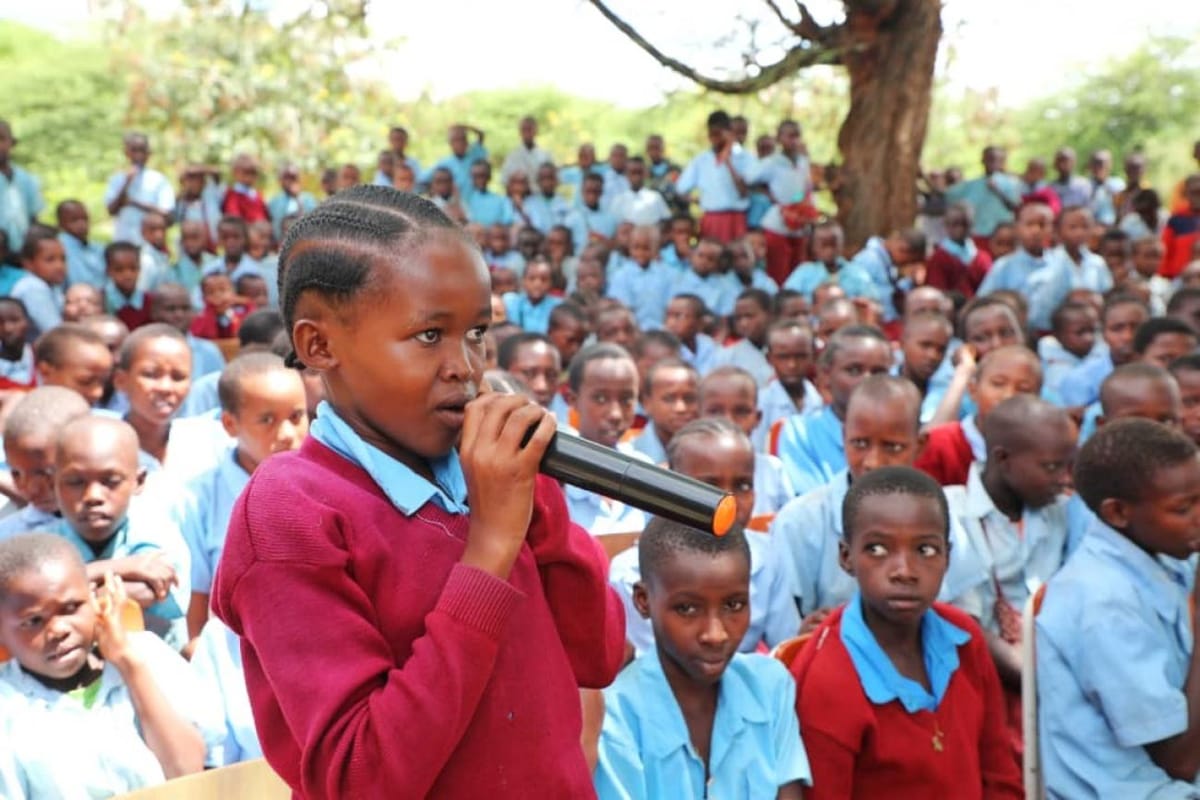
In the middle of Arusha, a town which is also a portal to the country’s natural beauty and global relations, a subtler transformation is underway. The youths, especially the women, are speaking out about issues of inequality between the genders as well as traditions and the future they desire, which depends on their gender.
Despite progress around the country in education and the reform of laws, many Tanzanian communities still enshrine gender inequality. Girls' dropout rates due to early marriage, teenage pregnancy, household responsibilities, and even gender-based violence remain high. In Tanzania, 36% of women aged 20–24 were married before the age of 18 (UNICEF). Youth in Arusha do not experience these as abstract statistics but as lived realities in the classroom, over the fence, in neighborhood conversations, and at home. For many young people, it's precisely this firsthand knowledge of inequality that has compelled them to take action.
Youth in Arusha are in an advantageous position to tackle inequalities based on gender since they are at the intersection of tradition and modernity. They are aware of the culture but are also aware of the need for a new future that is equitable in terms of gender. In schools, universities, and public spaces, discussions led by the new generation of female activists are exploring new avenues that work towards tackling gender inequality as a societal issue.
Education has become one of the most powerful weapons in the movement. To keep girls in school, youth clubs and organizations in Arusha are focusing on mentorship and awareness among girls about the importance of education. Education not only provides girls with knowledge and learning, but it also equips them with confidence and the ability to make their own choices. As stated by UNICEF, girls who have completed their education are less likely to engage in early marriage and are more likely to contribute to economic and social development in the country. Each additional year of schooling can increase a woman’s future earnings by 10–20% (World Bank). The youths are taking up this evidence to push the agenda of providing safe and conducive learning environments for girls to succeed in.
Outside the confines of a classroom, youth activism is also changing and influencing dialogue on gender-based violence, particularly in the context of reproductive health. In recent times, many youth have perceived and treated vulnerable issues such as consent, menstruation, and family planning as taboo. However, currently, youth in Arusha are establishing platforms where these challenges can be discussed. Through educating their fellow youths on these aspects, they are breaking a major cycle of silence on these issues.
This has been enhanced through social media platforms. Young activists are using social media to spread information, attack negative stereotypes, and raise awareness about issues that concern girls and young women. Issues that would previously remain unnoticed in communities are now being spread to thousands of people, sparking discussions and activism. The online discourses are then taken to the streets, resulting in campaign activities within schools and other community forums that involve parents, leaders, and educators.
Youth participation is even moving to the domain of policy and leadership. For instance, the youths of Arusha are part of various forums and advocacy groups that involve the local government and civil society organizations. By including the youth, it ensures that the policies adopted on education, health, and even issues affecting women are better understood and implemented. This tells the youth that they are not just consumers of decisions made by the leaders but rather stakeholders that shape the future.
Of course, obstacles exist. Lacking funds, cultural resistance, and uneven access to resources are hurdles to be cleared. Furthermore, young activists face disapproval at times for their questioning of customs or their willingness to openly discuss controversial topics. However, their commitment to their causes still results in great changes. Every question begun, every girl empowered, and every policy altered is a step toward a better world.
The battle for gender equality in Arusha may not have been won, but the emergence of the voice of the youths gives us hope. To many, change may not have started in the boardroom or parliament, but in the midst of courage and talks in the community. The youths have reminded us that equality between men and women is a win-win situation because it builds a better family, community, and country at large.
As Arusha City develops and continues to change, the youth of Arusha are not only building the future, but also redefining equality. By empowering and promoting the youth’s initiatives, Tanzania can get one step closer to a world where every girl and boy has the opportunity to reach her or his potential.